
Sundep : A Hidden Threat to Rice Crops
Sundep is one of the most serious issues in rice cultivation that often goes unnoticed in its early stages. This condition is caused by the larvae of the rice stem borer, Scirpophaga incertulas, which attacks plants during the vegetative phase by entering the stem and damaging the growing point.
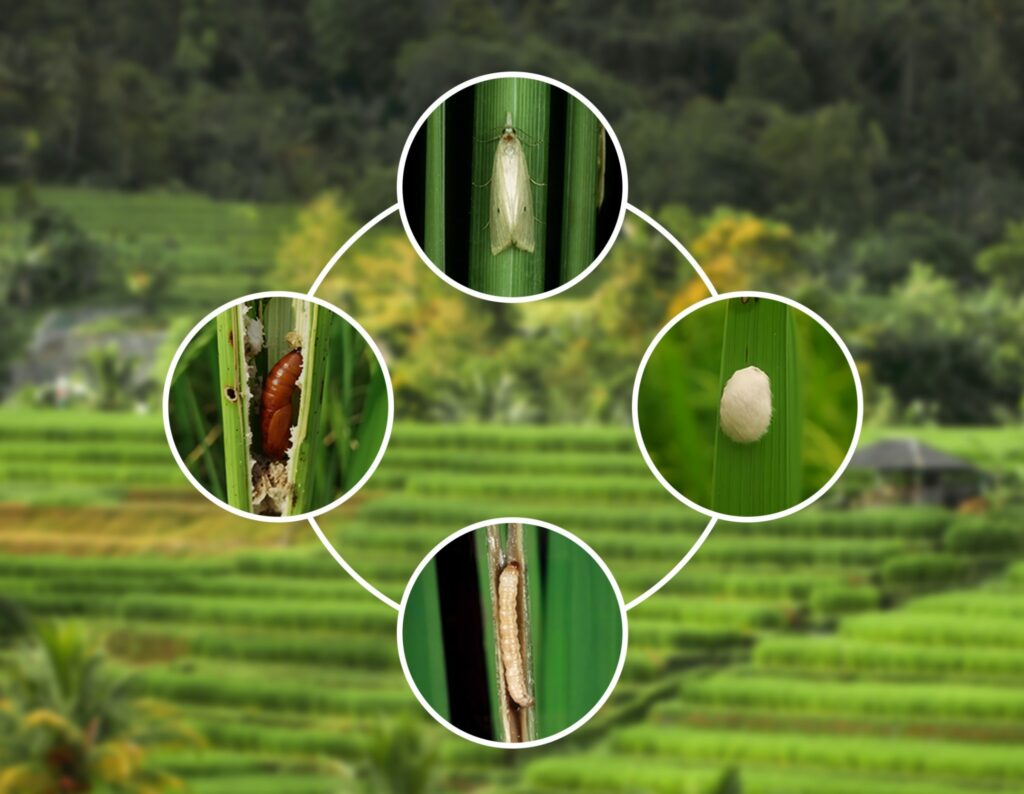
Unlike other pests that attack from the outside, sundep works silently. The larvae develop inside the stem, making early symptoms difficult to detect. As a result, many farmers only realize the infestation once the damage has become severe and plant growth has already been affected. Understanding the life cycle of the stem borer is a crucial step in effective pest management.
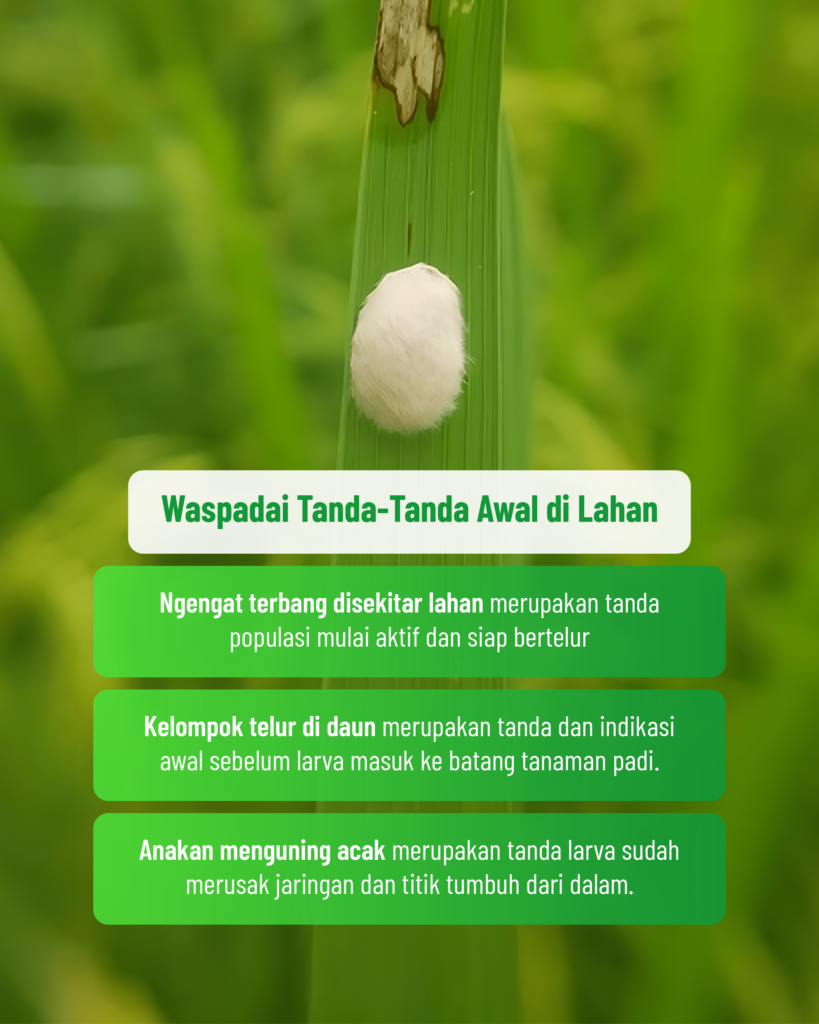
By doing so, farmers can determine the right timing for control measures, reduce application costs, minimize the risk of resistance, and protect plant growth from the early stages. In the field, there are several early signs that farmers should be aware of before the infestation progresses further. The presence of moths in the field indicates that the pest population is becoming active. In addition, clusters of eggs found on leaves serve as an early warning before larvae bore into the stems. At a later stage, rice tillers may begin to turn yellow irregularly due to internal tissue damage.
Once the infestation develops, the symptoms become more visible. The central leaf dries out and can be easily pulled out, tiller growth stops causing the clump to appear stunted, and small holes along with larval frass may be found on the stem. In some cases, larvae or pupae can be observed when the stem is split open. Due to its hidden nature, sundep control is far more effective when carried out early, particularly during the young plant stage. One preventive approach is the use of Ferterra, which provides protection against stem borer attacks from the early growth phase. Ferterra can be applied by broadcasting together with fertilization at 10–25 days after planting (DAP). This method is not only practical but also offers longer-lasting protection without disrupting beneficial soil microorganisms.
By understanding pest behavior, recognizing early symptoms, and applying timely control measures, farmers can prevent more severe damage and maintain optimal crop productivity. Early prevention remains the key to managing sundep in rice fields effectively.