
The Hidden Threat of Tomato Fruit Worms
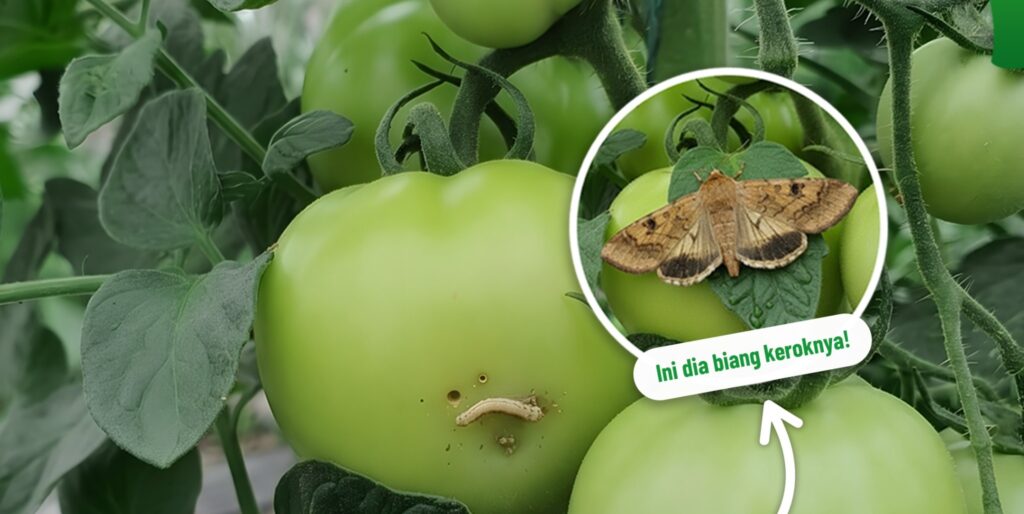
In tomato cultivation, fruit worm infestations are one of the most common problems that often go unnoticed until the damage becomes severe. From the outside, tomatoes may still appear smooth and healthy, while the actual damage is already developing inside the fruit. This makes fruit worms a serious threat, as they can significantly reduce both crop quality and yield. One of the main reasons why these infestations are difficult to detect is the extremely small size of the pest eggs, measuring only around ±0.5 mm. The eggs are usually laid individually on leaves, flowers, or young fruits, making them difficult to spot during routine field inspections.
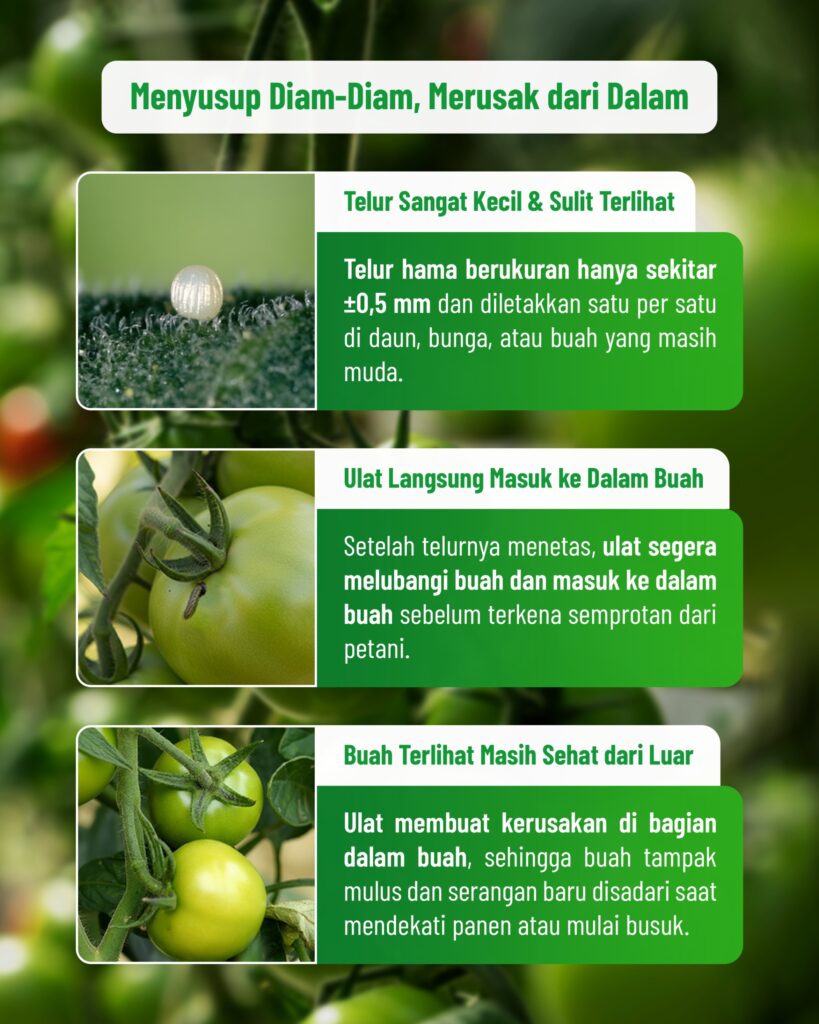
hatching, the larvae immediately bore into the fruit and begin feeding from the inside. At this stage, the pests are already protected within the fruit before being exposed to external pesticide sprays. As a result, many farmers only realize the infestation when the fruit starts rotting or approaches harvest time. The damage caused by fruit worms can spread rapidly. The feeding holes created by the larvae become entry points for bacteria and fungi, causing the tomatoes to rot internally even though the outer surface still looks healthy. In many cases, infested fruits turn yellow, wilt, and fall prematurely before harvest, leading to significant yield losses. This hidden feeding behavior is also the reason why conventional contact pesticides are often less effective against fruit worms. Since the larvae remain protected inside the fruit tissue, surface-level sprays may not reach the pests effectively, allowing them to continue damaging the crop from within.
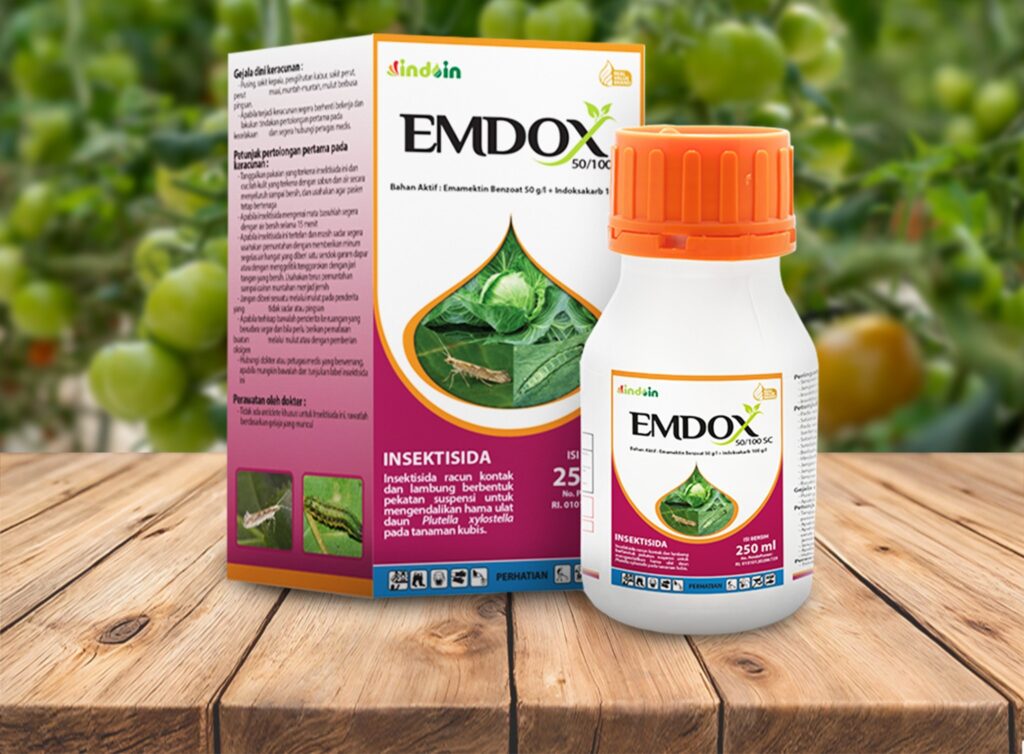
As part of an effective control strategy, Emdox can help manage tomato fruit worm infestations. Its combination of Emamectin Benzoate and Indoxacarb works by penetrating the fruit tissue and reaching the areas where the larvae hide. Once exposed, the larvae stop feeding, helping to minimize further damage to the fruit. Regular field monitoring from the early growth stages and timely pest management remain essential in preventing severe crop losses caused by fruit worms. With proper control measures, farmers can maintain both fruit quality and crop productivity until harvest time.